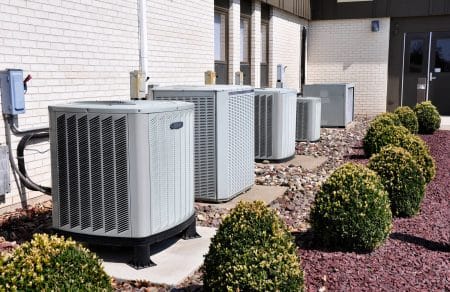
In Louisiana, the heat pump question is less about whether one works here and more about choosing the right efficiency rating, getting it installed properly and keeping it maintained.
If you are replacing an old air conditioner and furnace, someone has probably suggested a heat pump. Here at Big Easy HVAC, we install and service heat pumps across the New Orleans area, so let’s walk through what actually matters when you are weighing one for a Louisiana home.
If you would rather talk it through for your own house, contact us and we will look at your current system with you.
What Makes Louisiana Different for a Heat Pump?
The short version is that our climate leans hard toward cooling, with mild winters. A system here spends most of its year removing heat from the house, and only a smaller share adding it. The US Department of Energy notes that in moderate climates, heat pumps can be an energy-efficient alternative to furnaces and air conditioners.
We cover why that suits New Orleans homes on our heat pump service page. This post focuses on the decisions that come after that: which unit, how it is installed and how you keep it running well.
Louisiana Is Treated as a Hot-Humid State
Federal efficiency guidance does not treat the whole country the same. The Department of Energy’s Federal Energy Management Program (FEMP) explains that EPA sets ENERGY STAR efficiency levels for air-source heat pumps in three regions, Southeast, Southwest and Northern, to reflect the influence of climate on how heat pumps are used.
Louisiana is listed among the hot-humid, Southeast states. That matters because the efficiency figures you see quoted for colder parts of the country are not the ones that apply here.
It also means that advice written for northern homeowners, where a heat pump’s biggest test is a long, cold winter, does not map neatly onto a New Orleans house. Here, the hardest stretch for the equipment is a long, hot, humid summer. If your home is across the river, our guide to what Gretna’s climate, older homes and flood risk mean for your HVAC covers the local details.
The Ratings Changed in 2023
If you are comparing an older quote with a newer one, the numbers may not line up. FEMP notes that effective January 1, 2023, the Department of Energy changed the way HVAC systems are tested and updated the national standards for SEER and HSPF.
The newer ratings are written as SEER2 and HSPF2. When you compare units, make sure every quote uses the same version.
The change is in the testing method, so the same unit can show a different number under the new system than it did under the old one. That is not a sign that anything got worse. It is a reason to compare like with like.
Okay, So What Should You Look For?
Three things decide most of how a heat pump performs in a Louisiana home: the efficiency rating, the installation and the controls.
Read the SEER2 and HSPF2 Numbers
SEER2 describes cooling efficiency over a season, and HSPF2 describes heating efficiency. In Louisiana, the cooling number deserves the most attention, because cooling is where a heat pump spends most of its working life here. We look at how that plays out inland in our guide to what makes an HVAC unit energy efficient in a Baton Rouge home.
For hot-humid Southeast states, FEMP’s buying guidance lists three reference points:
Less efficient model: 14.3 SEER2 and 7.5 HSPF2
ENERGY STAR level: 15.2 SEER2 and 7.8 HSPF2
Best available: 24 SEER2 and 11 HSPF2
Those figures give you a way to place any quote you receive. A unit near the bottom of that range and one near the top are very different machines, even if they look alike from the street.
A higher rating usually comes with a higher price, so the right choice depends on how long you plan to stay in the house and how hard the system will work. What matters is knowing where each option sits before you decide, instead of finding out later.
Insist on a Proper Installation
A high rating on paper only pays off if the unit is installed correctly. FEMP is direct about this: installation problems like oversizing, improper charging and leaky ducts result in efficiency losses, occupant discomfort and shortened equipment life.
Oversizing is the first item on that list, and it is an easy trap when a replacement simply matches the old unit. Ask how the size was chosen, and expect an answer based on your house as it is today.
Charging and ductwork matter just as much. A correctly sized unit with the wrong refrigerant charge, or one pushing air through leaky ducts, still loses the efficiency you paid for.
Use a Thermostat Built for Heat Pumps
Many heat pumps carry electric resistance heating as a backup. FEMP recommends thermostats designed specifically for heat pumps, which ramp the temperature up slowly to avoid activating those electric resistance heating elements.
On the few cold mornings New Orleans gets, a standard thermostat that jumps the setting can switch on that backup heat when the heat pump could have handled the job on its own. North of the lake, cold mornings come more often, as NOAA’s heating figures in our guide to what makes HVAC different in a Covington home show.
Questions Worth Asking Before You Sign
A good installer will answer these without hesitation:
What are the SEER2 and HSPF2 ratings of the exact model you are quoting, and where do they sit against the hot-humid Southeast figures?
How did you size the unit for this house, and what did you measure to get there?
What happens to the ductwork? Will it be checked for leaks and sealed where needed?
What thermostat comes with the system, and is it designed for a heat pump?
What maintenance does the unit need each year to keep its rating and its warranty?
If a quote cannot answer these, it is hard to compare it fairly with one that can.
The Maintenance Thing (It Matters More Here)
A heat pump in Louisiana runs in cooling mode for long stretches of the year, then switches over for the cooler months. That means it gets very little time off.
A furnace sits idle most of the summer, and an air conditioner rests through the winter. A heat pump does both jobs, so wear builds up year round. That makes the annual check more important here, not less.
FEMP notes that regular maintenance, including correct refrigerant charge and filter replacement, is necessary to maintain peak performance. Refrigerant work belongs with a licensed technician.
A few simple habits are yours to keep:
Check the filter regularly and replace it when it is dirty, more often during heavy-use months.
Keep the outdoor unit clear of leaves, grass clippings and storm debris so air can move freely around it.
Watch for changes, such as longer run times, rooms that will not cool, or new noises, and call before a small issue becomes a breakdown.
None of these replaces a professional service visit, but they make each visit more effective.
Not every home has good ductwork, and some older New Orleans houses have none in parts of the house. Ductless mini-split systems are heat pumps too, with an outdoor unit serving one or more indoor heads.
They can make sense for additions, converted spaces or homes where running ducts is impractical.
In a raised shotgun or a camelback addition, they are often the simplest way to condition a space the main system never reached. The same rules apply: look at the ratings, size the system to the space and keep up with maintenance. Our ductless systems page covers the options, and our guide to how a mini-split installation should go in a New Orleans home walks through the process.
A heat pump can be a strong fit for a Louisiana home, but the result depends on three choices: a rating that suits the hot-humid Southeast, an installation sized and charged correctly, and a thermostat and maintenance routine that let it work the way it was designed.
Want a Second Opinion on Your System?
At Big Easy HVAC, we help New Orleans homeowners compare heat pump options and install them properly. To talk through your home, call us at 504-285-5606.
Much of the New Orleans housing stock went up before central air was common. The Census Bureau's 2020 to 2024 American Community Survey counts 195,552 housing units in the city, and 31.4 percent of...
Covington sits on the north shore of Lake Pontchartrain, between the Bogue Falaya and Tchefuncte rivers, and its winters run noticeably colder than the south shore's. Its streets mix houses built b...


 Sep 28, 2026
 Federal efficiency guidance does not treat the whole country the same. The Department of Energy’s Federal Energy Management Program (FEMP) explains that EPA sets ENERGY STAR efficiency levels for air-source heat pumps in three regions, Southeast, Southwest and Northern, to reflect the influence of climate on how heat pumps are used.
 A high rating on paper only pays off if the unit is installed correctly. FEMP is direct about this: installation problems like oversizing, improper charging and leaky ducts result in efficiency losses, occupant discomfort and shortened equipment life.
 By Admin