A maintenance plan is only as good as the checklist behind it, and there is a free national minimum most homeowners have never heard of.
If you have shopped for an HVAC maintenance plan, you have probably noticed that “tune-up” can mean almost anything, from a quick filter swap to a full inspection of both the cooling and heating sides. At Big Easy HVAC, we service residential systems across New Orleans, so let’s break down what a solid plan should actually cover and how to tell one plan from another.
If you would rather go over your own system, contact us and we will walk you through what a visit would check.
What’s Actually in a Maintenance Plan?
Here is the honest answer: whatever the contractor writes into it. That is why two plans with the same name can cover very different work.
There is, however, a yardstick.
There Is a National Minimum (Few Homeowners Know It Exists)
The Air Conditioning Contractors of America publishes ACCA 4 QM, Maintenance of Residential HVAC Systems. The American National Standards Institute reaffirmed the 2019 edition on August 7, 2024.
ACCA describes it as a nationally recognized, manufacturer-endorsed set of minimum tasks for HVAC maintenance inspections. In ACCA’s words, consumers can use that list to compare the value of the extra corrective work a visit recommends.
It is also free to download from ACCA. And ACCA’s own blog admits the catch: consumers and contractors often do not know a minimum standard for residential maintenance exists at all.
For contractors, ACCA says the standard gives a common platform for building a maintenance program, while still allowing different recommended repairs to be bundled in. In plain terms, two plans can both start from the same minimum and then add very different extras on top.
Maintenance Tasks vs. Service Tasks (This Is Where Plans Differ)
The standard draws a line that is worth knowing before you sign anything.
A maintenance task is work that needs a minimum of tools: adjusting components and restoring expendable materials, such as fluids and filters, to their agreed condition.
A service task is work that an inspection turns up, or that the plan calls for on a routine basis.
Real talk: knowing which side of that line an item falls on tells you whether a plan includes it or bills it separately. A plan that spells this out is far easier to compare.
The standard also changed in a useful way. ACCA’s blog notes that its 2018 update added a column with a recommended minimum frequency for each maintenance task, so how often an item gets checked is part of the yardstick too, not just whether it gets checked.
Two Questions to Ask Before You Sign
Does the visit cover both the cooling and the heating side? ENERGY STAR recommends annual pre-season check-ups, with the cooling system checked in spring and the heating system in fall.
What happens when the technician finds something? ACCA’s standard separates inspection from corrective work, so ask how findings are explained and priced before work starts.
It also helps to ask when the visits happen. ENERGY STAR points out that contractors get busy once summer and winter arrive, and suggests timing check-ups around the spring and fall time changes so they are easy to remember.
Okay, So What Should a Visit Cover?
ENERGY STAR publishes a plain-English list of what a typical maintenance check-up should include. It makes a good baseline to hold any plan against.
The Checks Every Visit Needs
Thermostat settings, so the system keeps you comfortable at home and saves energy while you are away.
Electrical connections, tightened, with voltage and current measured on motors. ENERGY STAR warns that faulty connections can cause unsafe operation and shorten the life of major parts.
Moving parts, lubricated to cut friction in motors.
The condensate drain, checked on the air conditioner, furnace or heat pump.
System controls and the start cycle, so the system starts, runs and shuts off properly.
Cooling Side Items
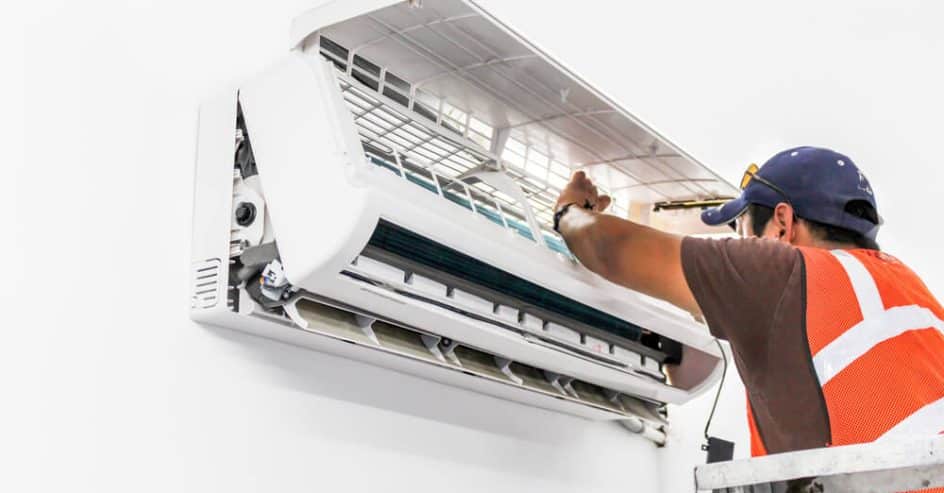
ENERGY STAR adds three cooling items: clean the evaporator and condenser coils, check the refrigerant level and adjust it if needed, and clean and adjust the blower for proper airflow.
None of these are filler. ENERGY STAR says dirty coils make the system run longer, and too much or too little refrigerant makes it less efficient. Airflow problems alone can cut efficiency by up to 15 percent.
Heating Side Items
For gas equipment, ENERGY STAR lists gas connections, gas pressure, burner combustion and the heat exchanger. This is the safety half of the visit: it notes that faulty gas connections are a fire hazard, and that a dirty burner or cracked heat exchanger keeps the burner from operating properly.
A heat pump needs both halves of the list, since it heats and cools with the same equipment. ENERGY STAR’s drain check applies to a heat pump in cooling mode, which here covers a long stretch of the year.
The Drain Line Thing (It Matters More in New Orleans)
Here is the item that deserves extra attention locally. An air conditioner in this climate pulls a lot of water out of the air, and all of it leaves through the condensate drain.
ENERGY STAR is blunt about what happens when that drain plugs: water damage in the house and a change in indoor humidity. A drain check belongs on every visit, not just when there is a puddle.
Why does it matter more here? A system in this climate spends a large share of its runtime removing moisture on top of lowering the temperature, so the drainage path carries more water over a season than it would somewhere drier.
The Department of Energy’s cooling guide also suggests occasionally passing a stiff wire through the unit’s drain channels to keep them from clogging. If your home has started to smell musty, our post on spotting indoor air quality problems in a humid home explains what that can point to.
This is the part many plans skip, and it is not a small part. ENERGY STAR estimates that in a typical house about 20 to 30 percent of the air moving through the ducts is lost to leaks, holes and poor connections.
Its warning signs are familiar here: rooms that are hard to heat or cool, stuffy rooms that never feel right, and ducts that run through an attic, crawlspace or garage. Around New Orleans, most of a duct run usually sits in an attic or a crawlspace, so that last sign is the norm rather than the exception.
A plan does not have to include duct repair. It should at least look at the ducts and tell you what it finds. Our air duct services handle insulation, testing and cleaning when the ducts are the problem.
ENERGY STAR also notes that the connections where vents and registers meet floors, walls and ceilings are common spots for leaks and disconnected ducts, and that most heating and cooling contractors also repair ductwork. And one quick tip if you seal anything yourself: never use duct tape, because it does not last.
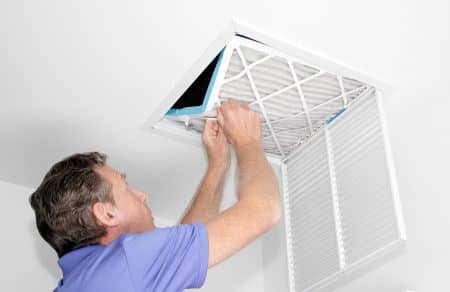
The filter, on the other hand, is mostly yours. ENERGY STAR says to inspect, clean or change the filter once a month in a central air conditioner, furnace or heat pump, and notes your contractor can show you how. The Department of Energy says routinely replacing or cleaning the filter can lower an air conditioner’s energy use by 5 to 15 percent.
A good maintenance plan covers both seasons, checks the electrical, the drain, the coils, the refrigerant, the airflow and the gas side, looks at the ducts, and is clear about what counts as an included inspection versus a paid repair. ACCA 4 QM gives you a free national minimum to hold any plan against.
Want Us to Look Over Your System?
Our HVAC maintenance visit inspects and tests the system, checks that the ductwork is properly sealed and confirms the unit is running as it should before we leave. That covers the vents and ducts, the thermostat, the air filter, the blower components and the burner, and everything we find is explained with both options where there are two.
At Big Easy HVAC, estimates are free. To book a visit before the next season, call us at 504-285-5606!
Do furnace heating systems typically work? It’s a common question that many homes and business owners have when considering installing or replacing an existing system. But to understand how they op...
As an HVAC contractor, do you struggle with managing the seasonal fluctuations in demand for your services? Seasonality can pose challenges for businesses in various industries, and the HVAC sector...

 Oct 26, 2026
 This is the part many plans skip, and it is not a small part. ENERGY STAR estimates that in a typical house about 20 to 30 percent of the air moving through the ducts is lost to leaks, holes and poor connections.

 By Admin