
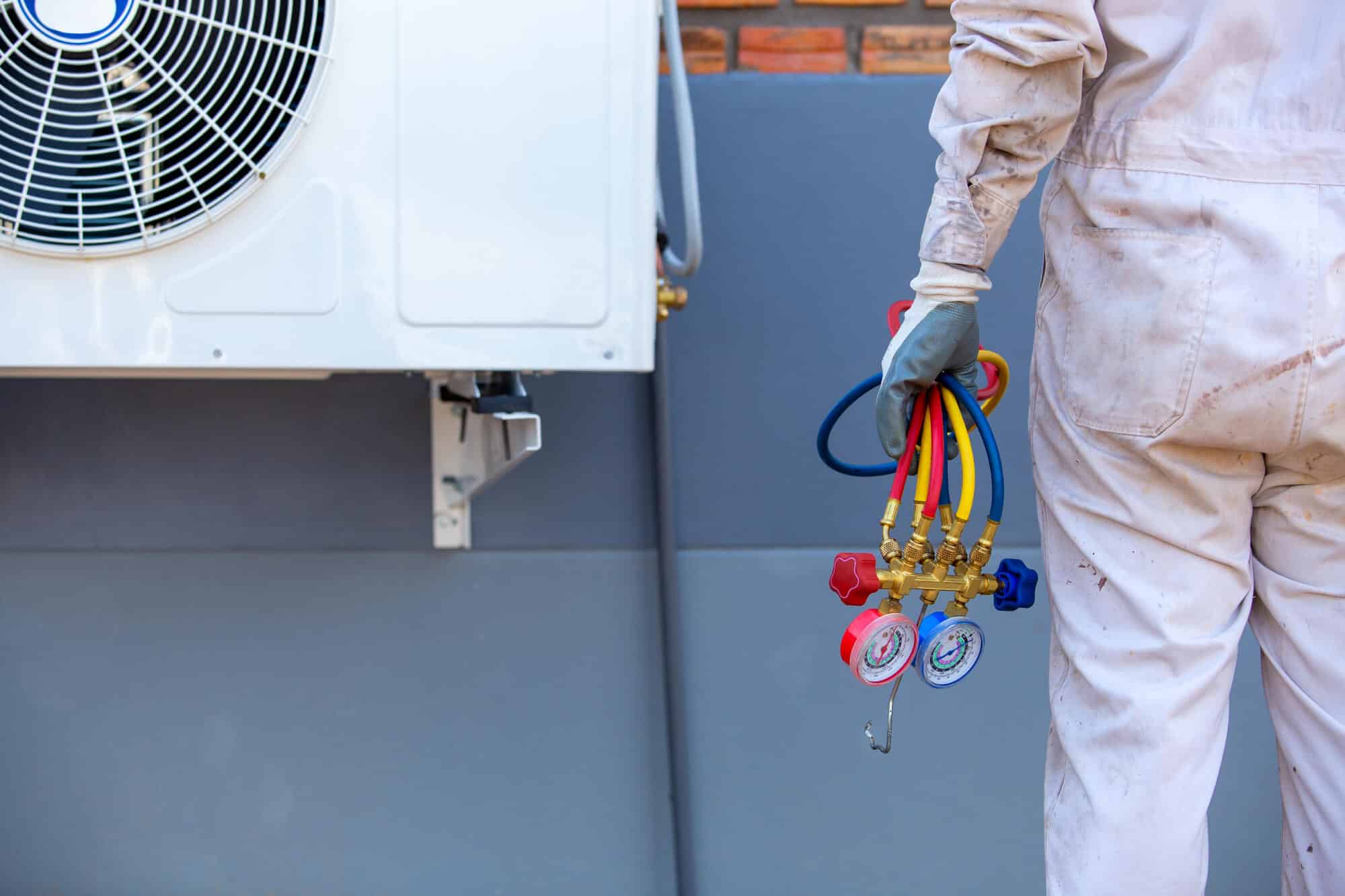
Residential Air Conditioning
Design, installation, repair and maintenance for home systems.
Residential
We run nine residential HVAC services for homes across New Orleans and 10 nearby cities. Each one has its own page setting out what it involves and when it is the right answer.
If you already know what you need, the list below is the fastest route. If you only know what the house is doing, the section under it works backwards from the symptom. Estimates are free, with no obligation attached to the quote.
Residential HVAC covers the equipment that heats your house, the equipment that cools it, and the ductwork that moves that conditioned air between rooms. Most problems sit in one of those three.
The unit gets the attention because it is the expensive part, but a great deal of what goes wrong in a New Orleans house is the distribution rather than the equipment. That is why we test the ductwork rather than assume it.
Each links to a page covering what the work involves and when it applies.
Design, installation, repair and maintenance for home systems.
For a run that is genuinely clogged, with the ductwork inspected first.
Insulation, testing and cleaning of the ductwork.
For rooms where running ductwork is not practical.
Installation, repair and servicing before the heating season.
Installation, replacement, maintenance and repair.
Handled alongside the system that moves the air.
Tune-ups that catch a weak component before the season that tests it.
When different parts of the house need different answers.
Work back from the symptom: the six patterns below cover most of what New Orleans homeowners call us about, and each one points at the residential service that usually answers it. Most people call us with a symptom rather than a diagnosis, which is the right way around.
None of this replaces looking at the system, and sometimes the obvious answer is the wrong one. It is a starting point rather than a conclusion.
That usually points at the air conditioning system itself, whether it is a fault, a charge problem, or a unit near the end of its life. It is the first thing we check and the most common answer.
That is far more often the ductwork or the layout than the unit. A leaking run, failed insulation or a room that takes the afternoon sun all produce it, and zone control addresses the last of those directly.
The classic sign of a system that is oversized for the house. It reaches the set temperature quickly and shuts off before it has run long enough to pull the moisture out, so the room is cold and damp at once.
An addition, a converted garage or an attic room that was never on the system. A ductless system conditions exactly those spaces without extending the duct run to reach them.
Heating equipment here sits unused for most of the year, which is its own kind of wear. A furnace or heat pump that has not run since March is the one that fails on the first genuinely cold night.
That points at the ductwork and, separately, at indoor air quality equipment. We inspect the ducts first, because the answer is often there and it is cheaper than the alternative.
Why here is different
New Orleans is harder on a system because the cooling season is long and humid, so equipment logs far more running hours here than the same unit would further north. Much of that work is removing moisture rather than lowering temperature.
The 1991 to 2020 normals put the annual mean at 70.5F and July at 83.9F, so a system here runs far more hours a year than the same equipment would further north. Every one of those hours is wear.
A large share of what an air conditioner does here is pull humidity out of the air rather than simply cool it. That is why sizing and drainage matter more here than a bare temperature figure suggests.
A unit that is too big cools quickly, shuts off, and never runs long enough to dry the air. That is why we size from the house rather than from its floor area.
January averages 54.3F and the heating season runs roughly November through March. It is a short season, which is exactly why the equipment is usually neglected until it fails.
Where our trucks go
New Orleans is home base, and we cover 10 nearby cities across the North Shore, the west bank, the river parishes and up toward Baton Rouge. Each has its own page.
Tell us what the house is doing and we will tell you which of the nine it belongs to. Estimates are free, and you can also browse our commercial HVAC services.
Questions we get asked
We run nine: air conditioning, air duct cleaning, air ducts, ductless systems, gas furnaces, heat pumps, indoor air quality, maintenance and zone control systems. Each has its own page explaining what it involves and when it applies. All nine cover New Orleans and the 10 nearby cities we serve, and estimates are free on every one of them.
Repair usually makes sense while the system is still within its expected service life and the fault is a single component. Replacement becomes better value once the same unit has needed repeated repairs, when the compressor fails, or when parts are getting hard to source. We look at what the system is actually doing and tell you which we think it is before you decide.
Size is calculated from the house rather than from square footage alone. Ceiling height, insulation, window exposure and how the ductwork runs all move the answer. An oversized system cools in short bursts and leaves the air damp, while an undersized one never catches up in August, which is why we measure on site.
In most New Orleans houses that is the ductwork rather than the unit. A run that leaks or has lost its insulation delivers less air to the far end of the house, and a room taking the afternoon sun behaves differently from one that does not. Duct testing settles the first, and zone control addresses the second.
Once a year at a minimum, and timed to the season ahead rather than to the calendar. Cooling equipment is best looked at in spring before it starts working hard, and heating equipment in fall, after the idle months that come before its short season.
It is worth an inspection first. Cleaning makes sense for a run that is genuinely clogged, where there is visible mold, or where there is evidence of pests. What it is not is a way to cut an energy bill, and we would rather inspect the ductwork and tell you honestly whether cleaning, sealing or neither is the right call.
We cover New Orleans and 10 nearby cities: Baton Rouge, Covington, Gretna, Hammond, Kenner, LaPlace, Madisonville, Mandeville, Slidell and St Rose. Each has its own page setting out what we cover there. Every service on both lists is available in all of them, and estimates are free everywhere.
Call 504-285-5606 during business hours, or send the form on our contact page. Tell us what the system is doing and roughly how old it is, and we will agree on a day and give you a figure after we have looked. Our hours are Monday to Friday, 8:00am to 3:00pm, and we are closed Saturday and Sunday.
Free estimates on all services