
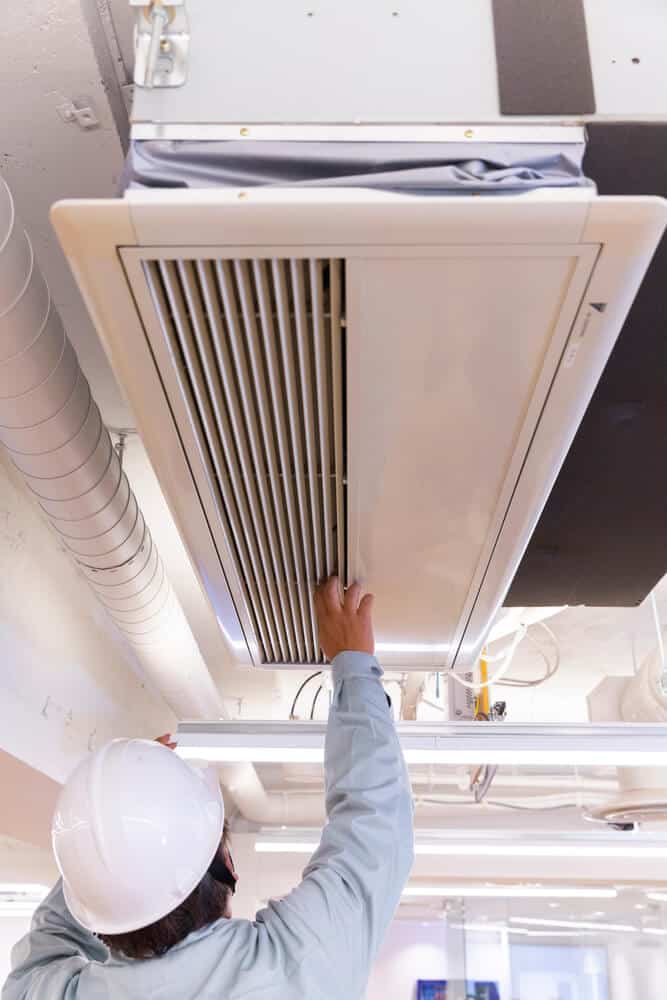
Proper Maintenance and Cleaning for Optimal Air Conditioning System Performance
At Big Easy HVAC, we provide AC maintenance and cleaning in New Orleans to boost performance, extend life, and cut energy costs. Call us today.
Air conditioning
Contact us today for a free consultation on our Residential Air Conditioning in NOLA!
Air conditioning is a process that cools the air by lowering its temperature and removing moisture from it. This is done through the use of refrigerant, which is circulated through an air conditioning system in order to absorb heat from the inside air and move it outside. To understand how air conditioning works, we must first look at the science behind it.
A residential air conditioning system typically consists of several key components, including:
Air conditioning works by using a refrigerant, a substance that readily vaporizes and condenses, to absorb heat from the air inside a building and transfer it to the outside. The basic process can be broken down into main parts:
This working fluid is a high-pressure, hot gas that exits the compressor and moves to the condenser. Metal fins wrap around the outside unit of an air conditioning system. These fins function similarly to a vehicle’s radiator in that they help dissipate heat more quickly.
The fluid is much cooler when it exits the condenser. Because of the high pressure, it also changes from a gas to a liquid. The fluid enters the evaporator through a tiny, narrow hole, and when it reaches the other side of the passage, the pressure drops. When this occurs, the fluid begins to evaporate and turn into gas.
Heat is extracted from the surrounding air as this occurs. This heat is required to separate the liquid molecules into gas molecules. The evaporator’s metal fins also aid in the exchange of thermal energy with the surrounding air.
When the refrigerant exits the evaporator, it is a low-pressure, chilled gas once more. When it returns to the compressor, the process begins again. A fan connected to the evaporator circulates air around the interior of the property and across the evaporator’s fins.
Through a vent, the air conditioner draws air into the ducts. This air is used to cool the gas in the evaporator, and as the heat from the air is removed, it cools. Ducts then return the air to the house.
This process is repeated until the temperature inside your home or business is reached. When the thermostat detects that the interior temperature has reached the desired level, it turns off the air conditioner. When the room begins to heat up again, the thermostat restarts the air conditioner until the desired ambient temperature is restored.
The rest of this guide, plus the main air conditioning service page.
At Big Easy HVAC, we provide AC maintenance and cleaning in New Orleans to boost performance, extend life, and cut energy costs. Call us today.
Get the most out of your air conditioning unit and stay safe this summer with these air conditioning safety tips from Big Easy HVAC.
At Big Easy HVAC, sizing and selecting the right AC for your New Orleans home saves you money for years. Call us today.
At Big Easy HVAC, we install smart, WiFi-enabled AC systems perfect for New Orleans homes. Contact us today for a free estimate.
Now that you know how air conditioning works, it’s time to get your own air conditioning system installed in New Orleans. At Big Easy HVAC, our experienced and certified technicians are here to help you every step of the way. We’ll work with you from start to finish to ensure that your air conditioning unit is properly installed and provides you with optimal cooling and air quality. Contact us today to learn more about our air conditioning services and installation!
Free estimates on all services